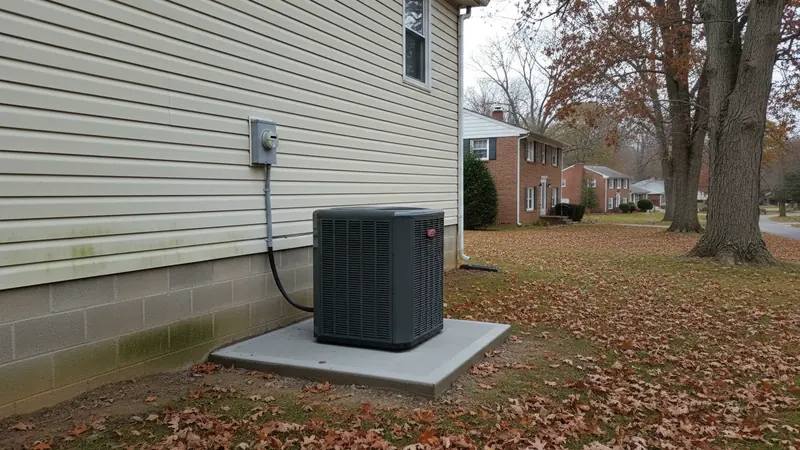
When your furnace stops or your AC blows warm air, ask what caused it. Get a clear repair price. Ask for proof the work solved the problem.
When a heating failure needs more than a service visit
If a carbon monoxide alarm sounds, get everyone outdoors. Call for emergency help from fresh air. Stay outside until responders say you can return. Do not wait for an HVAC appointment. Prince William County Fire and Rescue says fuel-burning heating equipment can produce carbon monoxide. You cannot judge safety by whether you smell anything.
While the heat is out, do not use a gas oven to warm the house. Do not bring a charcoal grill indoors. The county specifically warns against these substitutes. It also says to have a qualified technician check the heating system and chimney for blocked exhaust.
For a furnace repair, ask the technician why the equipment stopped. Ask whether it can run safely. If you reported an alarm or suspected exhaust problem, get that concern written on the work order. A furnace that starts again may still have the safety problem you reported. Make sure that is addressed before you treat the job as finished.
Source: Prince William County Fire and Rescue, Carbon Monoxide Poisoning, undated guidance, no effective date stated; Carbon Monoxide Poisoning Prevalent During Cooler Months, issued 2023-12-01, no separate effective date. Gathered 2026-09-23.
Ask for the fault before approving the part
Describe what changed: did the system stop entirely, run without cooling, or leave particular rooms uncomfortable? Tell the technician when it happens. Explain what earlier visits changed. Keep previous invoices handy. The Department of Energy's diagnostic guide starts with the system's condition, service history and comfort complaints. It then uses measurements to narrow down the cause.
For cooling trouble, ask whether the technician checked airflow before judging the refrigerant charge. The guide says refrigerant tests only mean something when airflow is adequate. Ask which reading or test supports the proposed repair. Get the result written down. “Needs refrigerant” deserves an explanation, not simply another charge on the invoice.
If the trouble began after a basement finish, mention that before work starts. Prince William inspectors document problems around altered ducts and enclosed equipment, as the county HVAC page explains. Ask whether the repair needs to address those changes too. This does not prove the alterations caused your failure. It gives the technician something relevant to check.
Before the technician leaves, ask what they tested again. Ask whether they could reproduce the original symptom. Weather or an intermittent fault may prevent a firm answer. If so, get the uncertainty written down rather than accepting the job as a completed fix.
Source: U.S. Department of Energy Building America Program/National Renewable Energy Laboratory, Measure Guideline: Air Conditioner Diagnostics, Maintenance, and Replacement, published March 2013, technical guidance with no regulatory effective date; Prince William County Building Development Division, Guidelines for Finishing Your Basement, version 2022-06-13, no separate effective date. Gathered 2026-09-23.
A refrigerant leak is a repair decision
EPA advises you to have a leaking air conditioner repaired rather than repeatedly topped up. Ask the technician to find the leak. Ask where they found it. Ask what needs repairing. Check whether the quote includes refrigerant. Check whether it includes the tests afterwards. If the leak has not been found, get the cost of investigating separately from the cost of fixing it.
Ask whether the technician holds EPA Section 608 certification for handling refrigerants. That credential covers refrigerant work. To check the contractor's authority to do HVAC work in Virginia, see the county page.
An older refrigerant does not automatically make repair illegal. EPA says you need not replace or convert an existing R-22 system solely because of the phaseout. Its HFC guidance also allows you to keep repairing existing systems, including major components. Those federal rules apply here. They do not tell you whether parts are available locally or what repairs cost.
If someone recommends replacement, ask why your equipment needs it. The reason might be unavailable parts, the failed component, compatibility, or how much work the repair involves. Ask for separate written descriptions of the work involved in repairing your system or replacing it. Refrigerant policy alone cannot tell you which choice makes sense for your equipment.
Source: U.S. Environmental Protection Agency, Homeowners and Consumers: Frequently Asked Questions, Purchasing and Repairing Home Air-Conditioners or Heat Pumps, and Frequent Questions on the Phasedown of Hydrofluorocarbons, current explanatory guidance, no single effective date stated for these pages. Gathered 2026-09-23.
What the repair quote should cover
We could not verify a local price series for residential HVAC repairs from a Prince William County primary source. That includes diagnostic visits, labour, replacement parts or emergency surcharges. We have no supported local “typical repair” figure to give you. The permit fees on the county page do not tell you what a contractor should charge to restore heat or cooling.
Before booking, ask what you owe for the visit if you decline the repair. Ask whether that charge counts towards work you approve. Check whether the appointment carries an after-hours charge. Before approving work, ask the company to list the failed part, labour, any refrigerant needed, and any return visit. These questions help you compare what each company offers. They do not give you a county price schedule.
Virginia's contractor rules require signed written contracts for covered residential repair work. That requirement expressly excludes routine maintenance or service contracts. The required terms cover price, work, timing and who handles permits. Changes to cost or scope must be written and signed. Ask for the parts and labour warranty in writing. Check that it explains what happens if the same symptom returns.
Source: Virginia Board for Contractors, 18VAC50-22-260, Filing of charges; prohibited acts, latest amendment effective 2025-09-01. Local repair-price statement records a research gap, not an estimate. Gathered 2026-09-23.
When the repair grows into a different job
Calling a job “repair” does not settle whether it needs a permit. Virginia lets the building official treat other repairs as minor and ordinary if they do not harm public health or general safety. That does not exempt every task on a service invoice.
Is the technician proposing to replace the furnace, change wiring or alter ducts? Get the revised work agreed in writing before going ahead. Ask the contractor to put who handles the permit in writing too. The county page covers the relevant replacement routes and fees. Use those details once the contractor has identified what will actually change.
Prince William's limited-service program covers eligible small residential jobs. You can still request a county inspection if you are concerned about work using its Master Tradesman certification option. Ask what paperwork will close the permitted job. Keep it with the repair invoice.
Source: Virginia Board of Housing and Community Development, 13VAC5-63-80, Application for permit, latest amendment effective 2024-01-18; Prince William County Building Development Division, Limited Service Repair Permit Program, undated, no effective date stated. Gathered 2026-09-23.
If the same problem comes back
Keep the original symptom, technician's findings, agreed work and invoice together. Tell the company exactly what has returned. Ask whether the next visit falls under its written warranty. Record its answer before agreeing to more paid work.
Prince William County treats code enforcement separately from contract disputes. Building Development can check whether work meets code. It cannot settle disagreements over bills, schedules or the finished result. Its dispute guidance points you towards the Virginia Department of Professional and Occupational Regulation or legal counsel. If work was done without a required permit, it directs you to Building Code Enforcement.
A passed inspection does not settle whether the contractor delivered everything promised in your agreement. Keep the permit record, if one applies, with the service paperwork. That lets each concern be reviewed on its own evidence.
Source: Prince William County Building Development Division, Dispute with Building Contractor, undated, no effective date stated. Gathered 2026-09-23.